Milestones in the life of a Serious Seeker (Sadhakha)

I want to talk about how the mindset and belief system of a serious seeker evolves. Based on insights from my own experience. 

In my younger days (less than 12 years of age), I was a believer in God or whatever the name you may call for such an entity or concept. But I used to question various practices. I used to ask my parents on what is the point of Abhishekam or  Bali of animals & offering of their meat etc. I would say, why can’t the food be donated to the needy. 

I had my questions on Tantra practices and the super human powers like Ashta-Siddhis etc. I was very curious about how Mantra and Tantra can be used to bring certain results. I used to wonder, if there are Sadhaka’s in current time who have achieved these. If so, who can teach such practices. How can they prevent misuse of such practices? The answer and conclusion I reached was – There were such practices which could bring results which are unexplainable by modern science. But over a period of time, there were no Sadhaka’s who have achieved it. These practices fell over time, as there were no qualified student, the reluctance of gurus to transfer this to unqualified students, loss of granthas and persecution of these practices by occupying forces. So the conclusion is, it was lost forever. For me or anyone as a seeker, this is a hopeless dead-end. 

A new ray of light emerges at this point, as I get to know about Gurus like Ramakrishna and Vivekananda. This gives a hope that some of the spiritual practices and teachings were available as recent as 19th century. All is not lost. Few practices and paths like Tantra and Vamachra may be. But Vedanta, Bakthi Marga and other paths are still alive. But what if I need here and now in 20th century? The conclusion I reached was, there is no one alive and realized to transmit the knowledge. Moreover there is an ever present danger of who is the real Guru and who is a fictious one? Almost all the arguments of atheist and active opposers of Sanatana Dharma will feed on this dilemma. They scare you away from seeking by raising the possibility of you getting brainwashed. There are many negative messages about cults, their dangers, people who lost on their path etc. etc. You have been warned and scared against going on your spiritual journey. The disappointing conclusion from this, there are no genuine gurus and I have no ability to find  who is the real one. 

Most believers are stuck in the above state. As crossing this requires a leap of faith, a leap beyond your rational and intellectual brain. Your intellect will continuously, raise questions, doubts, fears and keep you here. As I have seen with my fellow seekers, in most cases a mental breakdown which results in suicidal thoughts, a death like situation, makes them question the above conclusion. When I reached such a point where I had to try anything and everything to go beyond the above conclusion. I want to believe in a super natural power, I want to believe in a purpose for their life, I want to understand why I was facing the crisis. I also want someone to guide me in my quest. This is a stage where I sought a Guru. My prayer to Dhakshina Murthy whenever I was in a Shiva temple, was to show me my guru. At this stage Bhakti literature and discourses were my main stay. The promise of Rama to save anyone who surrenders and takes his name, provided me a hope. Irrespective of my above conclusion, I started beliving that God will show me the way. If not in this birth maybe the one after or the one after that and so on. But listening to his greatness and saying his name, were the only options left to me and I need to continue it.  You may not have a Guru, but until you find him, you can believe in an Ishta devata. Bakti practices like chanting God’s name, mantra ,nama jaba and listening to discourses like Bhagavata puranam can eventually take you to your destination. At this point, my conclusion is Bhakti will give results, eventually but surely. Now I have a guarantee and guarantor.

 At this stage an urgency and anxiety may arise. You may believe Bakti will give results, but you may want it sooner. What if I want to reach there soon? What if I can improve and accelerate my practices. You still want a Guru in this life to address such doubts and anxieties.  If your desire is strong enough, your commitment is strong enough, your cries are loud enough, your sincerity is pure, then you reach your Guru in this life. The axiom of “ask and you shall receive”; “when shishya is ready Guru appears”, is proven. This maybe their first experience which strengthens their belief in their path. Their earlier conclusion of God will save gets enriched with a new belief and hope that my Guru will take me there. 

But this is not the end of the story. The mind still plays it games. Now you realize that the enemy is within, your own mind :-). It creates doubts about Guru, his powers, his methods. What if there is a better Guru? What if he\she can take you there with an easier  and quicker. What if I get brainwashed? If you read about the lives of Chinmaya or Ramana and their followers, you will see some of them have left their Gurus and sought an another Guru.  But if you have found your path, your guru and stay on your Sadhana, you start seeing the results. My mediation experience after my initiation from my Guru was at a very different level than what I have experienced earlier. These kind of better mediation experience, many coincidences and mini-miracles, strengthen your believes and keep you on course. This may need a separate post, with details on this section of my journey.

Why am I sharing my Spiritual Journey?

I am writing these articles to share my Spiritual seeking journey and experience. It may be useful for my brothers and sisters who are in a similar path. Why do some mountaineers and explorers share their experience? To benefit others who may follow them, some point in future.

There are enough books, opinions, gurus and their teachings dealing with Spiritual quest. The value I think I can add is by sharing my own personal experience, the shifts in my mindset, the practices that I tried and the insights I gleaned from this process.

Many who pursue this lonely journey, deal with doubts, apprehensions, anxieties and confusions. I assume my learnings and experience will give them hope to stay on this path, if not some solutions and ideas to try out. A

There are many who knowingly and willingly or out of their ignorance, cause confusion, share their incorrect and immature interpretations of Sanatana Dharma, its teachings and it practices. This requires each genuine seeker to come and share their learnings, counter these half-baked knowledge. As a seeker, it is our duty to dispel these shadows with the light we have experienced. 

I have had second thoughts on this many times and refrained from this exercise. But more and more I feel this is a time to speak out.

When dealing with eternal and spiritual truths, my belief so far has been that, unless you have realized it beyond doubt, you shouldn’t speak. As you are not in-tune with the truth, your words and voice may add more confusions to the cacophony out there.

There is a continuous attack on ancient wisdom. At the same time there is an increase in interest and the number of serious seekers. This makes me feel the time is right to venture into this. 

I seek the blessings and guidance of my Guru, Kuladevada, and my Ishta Devadata as I venture into this. May their words, wisdom and knowledge flow through me. Let me be their instrument and nothing more. 

Sarvam Krishnarpanamastu !!

Where to start your journey on spiritual practices?

#1 Breathing Practices

Spirituality may mean different things to different people. Some may have reached an opinion and concluded that that is the truth or end.  They would like to defend it or hold on to it. Some may be wandering from one practice to another, believing in something to another, or following one guru to another, and so on. This is in fact not a bad thing, because you are searching and there is a yearning. Anyone who has tried to lose their weight will know that there are a million diet fads and methods. You are spoilt for options and it’s difficult to choose. If you are in this search and want to follow a practice in 2023, why don’t you start with simple breathing practices?  

If you have some exposure to eastern spiritual practices, especially Sanatana Dharma, you would have come across the importance of breathing practices. You may ask why breathing? Because the moment it cease you no longer exist. It is “that” important. But how many of us mind of our breathing. That is how conscious are we about this process. It happens naturally all the time. In times of stress or anxiety, you may feel like there is a heavy rock on your chest. You may have struggled to breath. Or you may have hyperventilated. Other than those instances we are rarely conscious of our breath.

By the above example you might have realized how connected our breath is to our thoughts, emotions that controls our Manas or Mind. If you go to any yoga or stretching classes, they will ask you to stretch your muscles when you exhale, not when you inhale. Why so? Breathing is connected to your body and muscular & neural systems. Imagine if you can leverage this link to your advantage? To improve your manas, buddhi, and body. 

That is where breathing practices comes to play. There are few simple practices that you can start with, 

  1.  Simply observing your breath, each inhalation and exhalation
  2.  Focusing your mind in between the eyebrows as you breath consciously.
  3. Mentally repeating a mantra with each inhalation and exhalation. Isha kriya is such a practice and it is easy to practice for anyone. 

Try this for a week or more. Ideally don’t expect observable improvements unless you have practiced between 40-48 days continuously. Try to practice at the same time and place. You will observe few improvements in your system like, 

  • Better control over emotions
  • More being in the moment situations or self-awareness
  • Reduction in chronic joint or muscle pains
  • Improvement in hormonal balance and related issues

Learnings from Teaching Middle School Students

A few days back I led a workshop for middle school students as part of a STEM (Science, Technology, Engineering, and Math) event. I volunteered for this about a month back. A series of zoom sessions and emails were exchanged to brainstorm ideas, select experiments, and plan the event. Each volunteer should lead a workshop, where an experiment will be conducted, and it will be repeated for 3 groups of students spread over 2 hours.

I picked up an experiment to use the microwave to measure the speed of light, due to my interest in “scientific cooking”. The experiment called “Chocolate at the speed of light” requires you to melt a bar of chocolate in a microwave. If you show sufficient patience and care you will get an unevenly melted chocolate bar, else a runny chocolate syrup. Irrespective of the form, the result is sweet – another reason to try this at home. After measuring the distance between melted chocolate blobs and few calculations later you will have an estimated speed of light.

  •  Importance of Planning

Two high schools assigned for my session as moderators. We connected before the D-day to structure our session. The moderators recommended a slide deck to guide the students and explain the concepts involved. We also decided to create a video to demonstrate the experiment. The high school kids came up with a very creative slide deck.

  •   Having a fallback option

 I took up the task of creating a video. The video creation required on-the-job learning of Apple iMovie. My kids took up the camera to help me. I had to repeat the experiment couple of times to get it right. This video will be our fallback option as a live experiment can fail. It is also challenging to carry out over a Google meet and repeat it for 3 groups.

  • What is simple and obvious for you may not be for many

We were happy with our preparation and were raring to go. Our first session was not very smooth. We ran the 2 mins demo which covered 7 steps and then asked the students to follow. There were many questions and doubts about the steps. I learned that what is obvious for me, may not be so for the audience who is trying it first. The students may not have used a microwave oven before, and it helped us to empathize with their situation.

  • Feedback and incorporating learnings

The high school moderators were quick to catch the learnings from 1st session. We made quick course corrections like, running the demo for a few steps and asking the students to follow along, check if they are stuck in a step. Our second and third sessions were quite smooth. The results were visible, most students completed their experiments successfully and the results were quite accurate as well.

How Inquiry-Based Learning can help you with Digital Technology Adoption?

Faster technology adoption is the norm

As a leader in a technology organization, you will be keeping track of technology trends and will encourage & support your team to understand and adopt them to solve business problems. The rate of technology adoption is increasing across the consumer and other markets.

No alt text provided for this image

Within the IT organization, there is an even faster rate of change and a constant ask to keep up with new programming languages and frameworks.

No alt text provided for this image

One of your challenges will be to accelerate the exploration and adoption of new technology. I would like to share how you can adopt an inquiry-based learning approach to overcome this challenge. It can help your team learning to learn and transform them to become a “continuously learning” team. 

What is inquiry-based learning?

In my career, I had opportunities to learn, unlearn and pivot across technologies and domains many times over. From engineering services to product testing, from test automation to service-oriented architecture, from building in-house frameworks and products to establishing tools for continuous integration & compliance. These transitions can bring a sense of anxiety and at the same time a sense of adventure – to explore new territories and break new grounds. Such opportunities enable us to be continuously relevant and support our customers with the latest and best technology.

Whenever I need to implement a new tool or technology, I learn about its key features through demos, videos, and documents. If I need to learn Azure, I try to start with a small pilot with a clear goal. Let’s say I want to build an online public gallery for an artist. I can list down few key features, like the ability to upload pictures, like a picture, share a picture, etc. If you consider this as a destination. Let us say your current state is point A, where you don’t have an Azure account. Your next logical setup will be to set up an Azure account (Point B). Once you have an Azure account, you will face the next set of questions and uncertainties. Which of the hundreds of services provides a web server? At this point, you will be relying on your understanding of building a web application. These prior pieces of knowledge and first principles become the “trunks and branches” (as called out by Elan) on which to link and integrate your new knowledge of Azure.

No alt text provided for this image

Once you create a webserver you will move on to the next logical question of how to deploy a web application in Azure? If you have deployed web applications in your local machine or on-premises server, the answer to this question is only the difference between on-premise vs. Azure. As you see this is a terrain exploration problem, of fixing a destination, scouting the next steps, learning about the new path, and integrating with your current understanding. familiar with your home to office commute, the rest of the places are just around the next turn or corner.

The inquiry-based learning (https://en.wikipedia.org/wiki/Inquiry-based_learning) approach relies on asking questions to understand a subject/topic or area. It is important to ask the right questions. A good filter is to see if the question will take you to the next step or help resolve a bottleneck in moving forward. It is essential to have an experiment, pilot or goal. This can serve as a motivation as well as a measure of success for your competency. This approach is also not a theoretical or learning to memorize exercise. It can really help organization which needs to adopt and apply new technology to produce an outcome, which may be a product or service. At a personal level, it can hone your critical thinking and problem-solving skills and is an intellectually rewarding exercise.

How can you adopt it?

If you want to adopt it you can follow the below steps:

1.    Chose a topic

2.    Identify an experiment or pilot.

3.    Identify the immediate next step. If you have any questions on how to reach this step list them down.

4.    Research and find answers to your questions, You could do this through public forums (Google, YouTube videos, Reddit, Stack overflow etc.) and by reaching out to SMEs and gurus.

5.    Reflect on the answers: Integrate the knowledge gained with your current understanding. Relate it to your knowledge on adjacent or similar paradigms.

6.    Experient with the answers: Apply the learning and reach the next steps. If you fail to reach it, you can take the learning and go back to Step 5 as you may have more questions.

7.    As you make progress you will gain more confidence in the new technology and gain momentum.

No alt text provided for this image

As you and your team gain familiarity with this approach, you can quickly explore, learn, and integrate new technology in your organization. I assume you will have your own secret sauce to gain competency over new technology, would you like to share your experience and hacks?

Footnotes:

1. https://www.visualcapitalist.com/rising-speed-technological-adoption/

2. https://blog.usejournal.com/this-is-how-long-the-life-cycle-of-a-javascript-framework-lasts-d21b29320512

Managing whitespace in a remote & digital workplace

One of the unrecognized and undervalued contributions of a leader may be her contribution to manage the whitespace. Whitespace refers to the gap between organization structure where the roles and responsibilities may not be clear. It also covers the dependencies, collaborations, and communication across teams required for a quality output. But these may not be institutionalized as a process. A user training or technical documentation team can gain valuable insight by observing user acceptance testing (UAT). They may observe the user’s struggle to understand metrics in a new dashboard. But the organization’s design and process may not mandate participation of training teams in UAT. As a leader you can facilitate this collaboration. This can result in a feature to improve user experience, e.g., a tooltip to explain the metric.

As a leader one needs to look out for such whitespaces and opportunities for collaboration. These connections and collaborations are essential for the quality and outcome of a program and to avoid failures. As most teams are working remotely and across locations, unless a conscious effort is made to bridge the whitespace, we risk moving towards a disconnected and siloed organization. Here are some tips to manage the whitespaces,

1.    Managing by walking around:

When teams are collocated in an office a leader can walk around. She can have informal conversations and uncover any bottlenecks and get a pulse on team motivation and collaboration. A similar approach can be adapted for remote working. You can leverage slack, teams or other collaboration to randomly ping and have a chat with your team.

2.    Effective kick-offs:

Kick-starting a new project and initiative in a completely remote working mode can be a bit of a challenge. More focused effort is required to uncover all key stakeholders. Few one-on-one sessions with sponsors and key stakeholders may be required to understand their expectations and get their buy-in.

3.    Incubation of new projects and initiatives:

The initial few weeks of a project and initiative will require close monitoring and mentoring to ensure required connections are established across teams. 

4.    Learning and sharing sessions:

A casual lunch-n-learn session is important for a team to learn and to innovate. It is even more important in a remote working environment.

5.    Peer to Peer connects:

As the opportunity for ice cooler chats decreases, other avenues may need to be enabled to foster informal connections. Human connection is a key element to provide a sense of belonging.

6.    Collaboration tools:

Tools like wikis, blogs, slack, and others can improve information flow and help teams to share updates on progress and achievements.

Won’t you agree establishing fruitful connections across team boundaries is crucial now more than ever? Do you want to share any tips and learnings for effective team collaboration?

image credit: https://webdesign.tutsplus.com/articles/using-white-space-or-negative-space-in-your-designs–webdesign-3401

Siri, Google Assitant, and Alexa – Anthromorphism and Design Principles

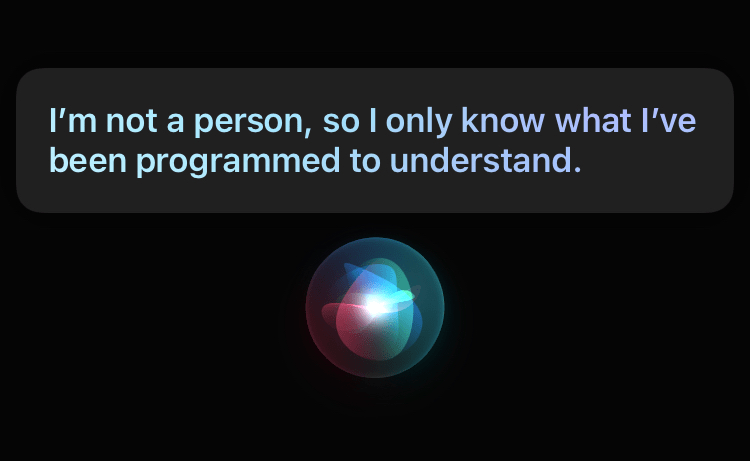
We brought home Alexa a few years back. In the next few weeks, my kids started testing her. They ask her questions, many of which she was not trained for. They tried the same with Google voice assistant and Apple Siri as well. They were amused by the difference in responses among these assistants. When you ask Google Assistant “Are you smart?”, she may say “I am smarter than a fridge” or “I am smarter than your microwave” or “I have been trained and I am still learning” etc. If you ask the same question to Apple Siri, she answers “I am not a person, so I only know what I’ve been programmed to understand” or “I aspire to be a truly intelligent machine. But I am still machine learning”. There is a slight difference in the way both these voice assistants answer the question. Google assistant tries to imitate a human a little bit more. Whereas Siri will admit she is a program, and she is still learning.

As you notice we treat these chat-bots or technically known as Conversational Assistants, like a human. They have a name, a voice, and you can even change their accent by fiddling with the settings. These design features give a humanlike quality (anthropomorphic) to an automation program. This practice is not limited to robotics or automation. The classic Coca-Cola bottle and animation characters also adopt such a design[1]

No alt text provided for this image
image credit: https://www.rogerebert.com/reviews/cars-2006

Anthropomorphic is defined as(of beliefs or ideas) treating gods, animals or objects as if they had human qualities

http://www.oxfordlearnersdictionaries.com

This anthropomorphic design helps us treat them with a level of familiarity. At least initially, until you realize they can’t answer many of the questions and are not as smart as you expect them to be. This user journey of assuming and approaching automation as human and then ending up with disappointment was hypothesized by Mori M a Japanese robotic scientist in his “Theory of Uncanny Valley” [2]. He predicted that as robots act more and more human, it increases positive user experience. At the same time, the user expects the automation to be as intelligent as a human. Due to this expectation increase, you reach a point where the capability of automation doesn’t match user expectations. This point is called as Valley of Uncanniness. As the AI capabilities increase, this valley will be pushed more and more to the right in the below diagram.

No alt text provided for this image

Image credit: https://link.springer.com/article/10.1007/s12599-020-00639-y#Tab6

Our workplace is being transformed with the increased use of digital assistants, chatbots, software robots, and even hardware robots like Mabu[4]. When you design such robots how many human-like or andromorphic features should you adopt? This design question is being answered by various research studies. I would like to highlight here a study conducted by Stephan Diederich et al[5], “Designing Anthropomorphic Enterprise Conversational Agents”. This study has identified few design principles for an anthropomorphic conversational agent.

1.    Equip the agent with intent detection: 

The bot can prompt the user to understand their intent. If you create an onboarding bot to help the hiring manager, the intent of the manager can be – To order a laptop for the new team member. Approve request to issue security badge/access to a facility etc.

2.    Self-identify the agent as a bot:

The can identify itself as a trained program and present its capabilities with examples. Also, offer the ability to interact with a human agent in case of failure to fulfill a request.

3.    Guide the user where required and track the context: 

When you chat or talk to a human agent, you expect that they remember or taken note of details shared earlier, e.g., an address or account number. In the same way, a conversational bot should maintain the context during its conversation. In case the user wants to change or switch context, the bot needs to understand and respond accordingly as well.

4.    Design the humanlike elements with care and detail

So that the bot responses don’t push the user experience to a valley of uncanniness.

What about Anthropomorphism & RPA Bots?

What if you are designing Robotic process automation (RPA), which runs in the background, triggered by an email or other events? You can name the bot to bring awareness to business users about the capabilities your organization is building. You can even conduct a naming contest or a naming ceremony. You can publish profiles of such bots in an internal portal, to familiarize users about the bot capabilities. You can anticipate failures and design recovery features when the bot fails to meet user expectations. Such carefully thought andromorphic features can support user engagement, change management, and strategy and vision for automation. Thus freeing up users to focus on providing personalized services and high-value tasks.

[1] – Design Defined: How Anthropomorphic Form Shapes Product Design

[2]- Uncanny Valley

[3]-Too real for comfort? Uncanny responses to computer-generated faces

[4]- This little robot helps care for people with chronic conditions

[5]- Designing Anthropomorphic Enterprise Conversational Agents

Reflections from a 21-day writing journey

I jumped into a commitment to write every day for 21 days. I started this exercise without a “backlog” of topics. Without much thought and plan. I knew in the back of my mind that, my mind will play games and prevent me from committing publicly. If this is some news for you, you have to go back to my first post and find my commitment at the end – so easy to miss 😀. I wanted to share a few observations and learnings from this exercise.

The most crucial observation from this exercise has been the increased attention it brings to your day. Once you commit to writing and sharing a post daily, at the back of your mind you are looking for a topic. This brings a focus to your day. Without it, this past month would have been a blur for me. Merging seamlessly with the many months and years before it. There have been many days where any event, which significantly affected my emotion or triggered my curiosity has resulted in a post. It could be a deep conversation you had with your peer or a friend, an “aha” moment, or a post on a social platform. It forces you to reflect on it and uncover it a little more. This exercise by itself brings a sense of joy.

This increased attention & focus on key events pushed the usual anxieties and other frivolous thoughts out of your mind. Do you keep asking yourself what did I do today? What experience is worth recounting and reflecting upon? You want every day to count and start setting yourself a little higher bar.

Writing by itself and especially in a public platform requires you to switch off your self-judgment. You park your judgment on the idea, topic, narration, style, or language. Without it, you will play a dual role of a creator and editor/polisher. Many experts recommend switching off the critique mode when you create and switch it on when you edit. As you practice and develop this, you can try to apply this to other parts of your life as well. Giving yourself more freedom to be creative and being in the moment when you are cooking, preparing a presentation, etc.

The oft-cited benefit of bringing clarity to thoughts and ideas is very real too. There are days when I started with a nebulose idea or a “thingy” or a vague curiosity on a topic. As I start writing and editing, I could see that topic a little more clearly and uncover the parts.

When you start researching to know more about a topic or engage in a conversation about it with someone you learn more. There are a bunch of URLs open in my browser to read and dig a little deeper into a topic.

You start valuing your family support system, friends, and social connections a little more. I had the privilege of a bunch of friends (RajiRamjeeManiAnandSureshDarshan & Prashanth) encouraging me in this journey with their likes, comments, direct messages, and conversations. I am grateful for Subra’s mentoring mentor, the daily WhatsApp nudges, comments, and words of encouragement. Thanks to JK, a longtime friend and the one who sowed the seeds of inspiration for my writing.

image credit: https://www.scientificamerican.com/article/why-feeling-close-to-the-finish-line-makes-you-push-harder/

Cars of the Future – Mind Shift & Market Shift

Imagine a fully autonomous car and assume the self-driving system has been tested and its reliability is much higher than any existing transportation modes. What features will a customer value? You may either want a large window to enjoy the scenery or you may want a screen for each of your fellow travelers. Maybe an in-built video gaming console with support for AR/VR. Will anyone mind the power rating of the engine or heated steering? I doubt it. There may still be a market for cars with steering. In the book Infomocracy, author Malka Older a future where nation-states may not exist and how democracy may change in the future. She also imagines an interesting mode of transportation – a vehicle called Crow. They are like flying, autonomous RVs, which can fly to any part of the world. You can anchor them to your office or any other place.

As a fictional author, you can let your imagination fly and dream a future. But what about the CEOs and leaders of the traditional car makers who are navigating a major shift in a market, so-called S-curves. In such transitions, the technology, features, and value of a product or service undergo a major change. The incumbents are disturbed. The value of electronics and the innovation that goes into the electronics and software brain which controls almost everything keeps on increasing.

No alt text provided for this image

Source: Freescale Semiconductor

If you are a traditional manufacturer you reach a stage where your core competency and edge are lost. The engineering skills and the thousands of patents on IC engines, transmissions are no longer relevant. Suddenly you need to manage the 7+ Linux kernels that are running your platform. In a scenario, where most car manufactures fall short on the user experience of their infotainment system this is a tall order. Upgrading infotainment software in a car is not an easy task in most models. Mik Kresten (author of Project to Product) recently shared a post on Volkswagen hitting a roadblock in building the software for their autonomous car. The post has garnered interesting comments on the many drawbacks that traditional carmakers have to overcome. Also, how difficult it is to get the mindset, organizational structure, and many other things right to be a successful player in the newly emerging market for electrical autonomous cars.

No alt text provided for this image
image credit: YCharts

The market valuation of Tesla may look like an aberration, but what we may overlook are the challenges Tesla has overcome.

Social Connections and Cultural Shock

I have lived in a city on an average for 2 years in the last 2 decades of my work life. When compared to our previous generation, we are traveling and moving across cities and continents, a lot more. I maintain a spreadsheet to help me remember my past addresses. I don’t know when I will need them to fill a visa application or a background check.

If you move to a different city or even a different community in the same city you will experience a significant change in your social connections. These days people relocate often (the corona-driven restrictions will be temporary I guess), they have colleagues from different countries or different continents altogether. There is also an opportunity to stay in touch with your friends over longer duration and distances, thanks to social media. As the cliché goes, humans are social animals. A lot of our behavior patterns and emotions are designed to make us successful as a tribe. One of the hypotheses for our larger brain is the need to track and manage social connections. Dunbar’s research shows our brains have a capacity to maintain a tribe size of approximately 150. Social connection is one of the key needs for your mental health. How are we going to manage the much larger pool of social connections and the longer duration of those connections facilitate by technology? We have not evolved for this change which happened quite recently. You already see your friends taking a “fast” from FB to keep their sanity.

“Using the equations that emerged from this line of work, Dunbar was able to estimate what the largest effective, coherent social group should be for each kind of primate, based on its neocortex ratio. His analysis suggests that for humans the number is around 150, the largest for any primate. This is referred to as “Dunbar’s number,” and it turns out that a striking number of human organizations tend to operate at around that size. For instance, village size, estimated from as long ago as 6000 BC and as recently as the 1700s, converges around the 150 mark. Ancient and modern armies also organize around units of about 150 people.”

Lieberman, Matthew D.. Social: Why our brains are wired to connect (pp. 32-33). Oxford University Press. Kindle Edition.”

If you move across countries and cultures, the change is not only limited to your social connection, but you also get immersed in a different culture. This is experienced as a “cultural shock”. Depending on the duration of this change, you go through a roller coaster ride which may start on a positive/negative note depending on whether you initiated the change or you reluctantly signed up for it. But both the disturbance to social and cultural connections that we experience frequently can be an opportunity. In addition to the typical, experience new culture, food, and make new friends’ prescription, it can help you increase your self-awareness and provides an avenue to develop resilience & flexibility.

Expectations : As you go through cultural change, you experience and become aware of the different expectations from people around you. This can be in terms of maintaining and attending social events and your own expectations from those around you.

Values: The value for time, cleanliness, efficiency, natural resources, and others changes vastly across culture and even within a country. In a city, you may see solar cells, recycle bins everywhere, but in another city in the same country, not so much.

Value of relationships and connections: As you experience the churn in social connections, you can reflect, whom you want to speak to over the large distances and time zone that now separates you? and why?

Boundaries, rules, and constraints: Every “no” and hesitant “yes” can provide us an opportunity to recognize our biases, boundaries, and rules we have. It could be about a travel mode we don’t prefer, a food we resist to enjoy or an inefficiency we can’t tolerate.

As you go through these changes & in some cases challenges, you can develop a neutral, non-judgmental attitude and take the good in each while ignoring the rest.

Note: Thanks Kailash for our interesting conversation which triggered this post.

image credit: https://tasteforlife.com/conditions-wellness/mood/social-connections-well-being